USA-Made

Oliver Heaviside: Translating the Language of Electromagnetism into the Foundation of Modern Shielding

HeavisideCover

In the late 19th century, when electromagnetism was still a vast and tangled mystery, Oliver Heaviside emerged as a translator between theory and practical engineering. A solitary figure working largely in isolation, Heaviside took the sprawling complexity of James Clerk Maxwell’s original electromagnetic equations—twenty separate formulas written in quaternions—and distilled them into the four concise vector equations every engineer recognizes today. His work didn’t just simplify physics; it laid the mathematical foundation for modern signal integrity, transmission theory, and EMI/RFI shielding.

The Challenge of Maxwell’s Original Work

Maxwell’s 1860s formulation of electromagnetic theory was groundbreaking but intimidatingly dense. Written in a mathematical language few understood, his equations unified electricity, magnetism, and light under a single framework. Yet for most engineers of the time, they were too theoretical to apply. The equations described how electric and magnetic fields interacted, but their form was cumbersome for solving practical problems like telegraph efficiency or energy loss along a wire.

Heaviside, though lacking formal university education, had an exceptional intuition for mathematics and an engineer’s eye for clarity. In the 1880s, while recovering from illness and working from his small home in Devon, he began reinterpreting Maxwell’s ideas using vector calculus, a simpler and more visual mathematical language. The result was a revolutionary transformation — one that turned electromagnetism from an abstract curiosity into a practical science.

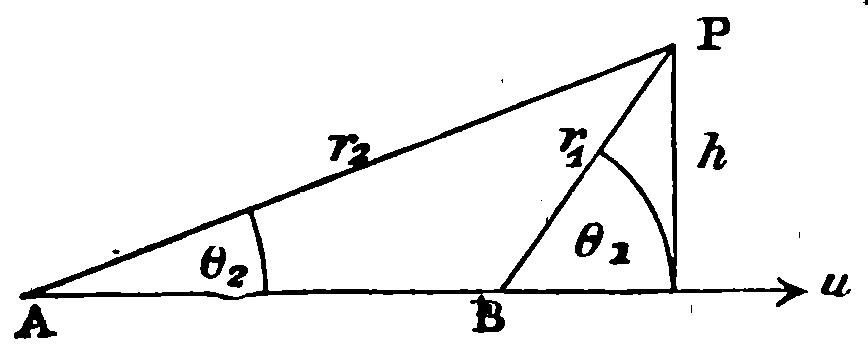
Heaviside
One of Heaviside’s characteristic vector diagrams, depicting how angles, distances, and directions define electromagnetic propagation and reflection within his theoretical framework.
Telegraph Station

Simplifying the Invisible: Heaviside’s Breakthrough

Heaviside’s reformulation was not a mere translation; it was a reimagining of how electric and magnetic fields could be understood. He introduced terms like impedance, inductance, admittance, and permeability—words still at the core of electrical engineering. His equations described the behavior of waves along a conductor, predicting how energy travels, reflects, and dissipates — insights that would later form the basis of transmission line theory.

In his landmark work on the telegrapher’s equations, Heaviside analyzed how signals decay as they travel along cables, accounting for resistance, inductance, capacitance, and leakage. He showed that adding inductance could counteract signal distortion — a principle that directly influences how modern engineers design high-speed communication systems.

Heaviside’s approach effectively created a mathematical toolkit for controlling electromagnetic behavior, allowing engineers to predict interference, reflections, and losses. These same principles are now essential in designing EMI/RFI shielding materials and ensuring signal integrity in electronic devices.

From Equations to Engineering: The Birth of Signal Control

Heaviside’s insights were revolutionary precisely because they bridged theory and hardware. By modeling how electromagnetic waves propagate through different media, he offered a roadmap for managing unwanted interference—what we now call electromagnetic interference (EMI) and radio-frequency interference (RFI).

In modern systems, these concepts guide how engineers mitigate crosstalk, reflection, and radiation. Whether in the intricate traces of a printed circuit board or the shielding of a data cable, Heaviside’s mathematics governs the invisible dance of energy between components. His work anticipated the waveguide, the coaxial cable, and even the impedance-matched transmission line, all of which depend on his vector-based understanding of field behavior.

Every time an engineer calculates return loss, optimizes impedance, or designs a ground plane to preserve signal integrity, they are, knowingly or not, invoking Heaviside’s legacy.

Waveguide
Electromagnetic waves guided through a controlled path — a direct application of Heaviside’s vector-based understanding of field behavior, where electric and magnetic fields propagate in harmony within confined boundaries.
Coaxial Connector
The coaxial cable embodies Heaviside’s field equations in practice — its concentric design preserves impedance and ensures electromagnetic fields remain balanced, minimizing reflection and interference.

Electromagnetic Harmony in Modern Shielding

The same laws that Heaviside simplified continue to shape how companies like Leader Tech address EMI/RFI challenges today. His understanding that electromagnetic fields cannot be confined without managing both electric and magnetic components lies at the heart of effective shielding.

In modern electronics, as data rates increase and devices grow smaller, the challenge is not just blocking interference but preserving field balance and signal coherence. Shielding enclosures, conductive gaskets, and board-level shields must all maintain this harmony, ensuring that signals travel predictably without reflection or distortion.

Heaviside3
A geometric construction from Oliver Heaviside’s electromagnetic analyses, illustrating how he visualized field relationships and spatial symmetry using distances and vector components.

Leader Tech’s Board-Level Shields (BLS) and Fabric-Over-Foam Gaskets (FSG) exemplify this balance. They provide controlled conductivity and grounding paths that preserve the integrity of electromagnetic fields—an applied manifestation of the relationships Heaviside quantified more than a century ago. Similarly, our Conductive Elastomers and Thermal Interface Materials manage not only heat but also continuity in electromagnetic behavior, preventing the resonance effects and field leakage that can degrade performance.

At the theoretical level, every well-designed shield, absorber, and gasket can be seen as a practical translation of Heaviside’s vector form of Maxwell’s equations: managing divergence and curl, controlling field gradients, and ensuring the system remains in equilibrium.

The Legacy of the Invisible Engineer

Heaviside’s life was as remarkable as his work. Despite his profound contributions, he lived modestly and was often dismissed by academic institutions. Yet his intellectual independence allowed him to explore ideas others ignored—such as the Heaviside layer, the ionized layer of Earth’s atmosphere that reflects radio waves, enabling long-distance communication. His prediction of that layer, decades before it was confirmed experimentally, demonstrated his rare ability to think across the boundaries of mathematics, physics, and engineering.

His ideas were so far ahead of their time that even today, engineers rely on his methods when modeling complex systems. The equations governing transmission lines, impedance matching, and electromagnetic compatibility are modern extensions of his 19th-century insights.

Heaviside transformed Maxwell’s abstract beauty into a language that could be built, tested, and shielded. In doing so, he gave engineers the mathematical vocabulary to tame electromagnetic chaos—a task that remains at the core of Leader Tech’s mission today.

Heaviside Layer
The ionized region of Earth’s atmosphere, known as the Heaviside layer, reflects radio waves back to the surface — a phenomenon Heaviside predicted through his understanding of electromagnetic wave propagation and field behavior.

Reflection: Order from Complexity

At its heart, Heaviside’s story is one of clarity born from complexity. He didn’t invent new forces or phenomena; he simply helped the world understand them better. In every high-speed circuit that transmits data without distortion, in every enclosure that keeps interference at bay, and in every shield that preserves the purity of a signal, his influence endures.

Through the lens of modern EMI/RFI shielding, Oliver Heaviside stands as more than a mathematician or engineer—he is a silent architect of the field’s very language. His work reminds us that the ability to see order in the invisible is what truly advances technology.

LinkedIn
X
Facebook
Email
David Mendez Galpern
Leader Tech EMI/RFI Shielding integrated into aerospace applications

Subscribe to receive our newsletters and product updates

This field is for validation purposes and should be left unchanged.
Leader Tech Inc needs the email address you provided to send you our newsletters and product updates. You may unsubscribe from these communications at any time.
Archives
×

Rep Firm