USA-Made

Heinrich Hertz: Shaping the Foundations of Electromagnetic Technology

Heinrich Hertz

In the late 19th century, Heinrich Rudolf Hertz revolutionized the world of science and forever altered the way we understand communication. While many might recognize the term “hertz” as a unit of frequency, few truly know the fascinating story of the man behind it—a brilliant physicist whose groundbreaking experiments provided tangible proof of the invisible, laying the foundation for the modern era of wireless communication and electromagnetic technology. His work confirmed James Clerk Maxwell’s theories and sparked innovations that continue to shape how we harness the power of electromagnetic waves today.

A Spark in the Lab: Hertz’s Early Work 

Hertz was born in 1857 in Hamburg, Germany, a time when electromagnetism was still a theoretical idea awaiting validation. While scientists such as Michael Faraday and James Clerk Maxwell had proposed the existence of electromagnetic waves, no one had successfully demonstrated them. Hertz, a curious mind with a gift for precision, took up the challenge. He wanted to move beyond theory, to see and measure the invisible waves that Maxwell had mathematically described. 

Michael Faraday
Faraday’s discovery of how electric and magnetic fields interact laid the groundwork for the electromagnetic theory Hertz later proved experimentally.
James Clerk Maxwell
Maxwell’s equations predicted the existence of electromagnetic waves, which Hertz confirmed, turning theoretical physics into observable science.

In 1886, Hertz began conducting experiments that would lead to groundbreaking discoveries. Using simple materials—a spark gap, two metal spheres, and a Leyden jar (an early capacitor)—he created the first apparatus capable of generating and detecting electromagnetic waves. When he observed sparks jumping between his metal spheres at specific distances, he knew he was witnessing something extraordinary: the confirmation of radio waves. 

Hertz Experiment
By generating sparks with a spark gap and detecting them at a specific distance using two metal spheres and a Leyden jar, Hertz confirmed the existence of electromagnetic waves, proving they travel through space. Photo: lindahall.org

Proving Maxwell Right 

Hertz’s work wasn’t just about creating sparks in the lab; it was about proving Maxwell’s theories, which described how electric and magnetic fields propagate through space as waves. Hertz’s experiments provided the empirical evidence needed to validate Maxwell’s equations. He demonstrated that these waves traveled through the air at the speed of light, carrying energy without the need for wires. 

This discovery was revolutionary. It marked the beginning of a new age in physics and paved the way for wireless communication. With his simple setup, Hertz had not only confirmed the existence of electromagnetic waves but also ignited a future for innovations that would eventually include radio, television, and Wi-Fi. In fact, every device today that transmits or receives data wirelessly owes something to Hertz’s experiments. 

EM Wave
This image illustrates how electric (blue) and magnetic (orange) fields oscillate perpendicularly to each other and to the direction of wave propagation, as predicted by Maxwell's equations and confirmed experimentally by Hertz. Photo. commons.wikimedia.org

Legacy in Frequency and Beyond 

After proving the existence of electromagnetic waves, Hertz focused on further studying their properties. He found that these waves could be refracted, reflected, and polarized, much like light. This insight established a critical bridge between electromagnetism and optics, reshaping the scientific understanding of light and electromagnetic fields. 

However, Hertz was humble about his discoveries and seemed unaware of the full impact his work would have. He referred to his radio waves as “a very small phenomenon” and did not live long enough to witness the full-scale revolution his findings would inspire. Despite his modesty, the impact of Hertz’s work would reverberate across generations, leading scientists and engineers to new frontiers in communication and technology. 

EM Waves Refraction NASA
As waves pass through different mediums, like air and glass, their path bends due to changes in wave speed, a phenomenon central to optics and wave-based technologies. Photo: science.nasa.gov

From Invisible Waves to Practical Applications: EMI Shielding and Modern Devices 

Hertz’s discoveries have practical applications today that go beyond communication. In an age where devices operate on a spectrum of frequencies, electromagnetic interference (EMI) became a significant challenge, especially as electronic systems grew more complex and interconnected. Recognizing the need to regulate and mitigate EMI, the U.S. Department of Defense established MIL-STD-461 in 1967, a standard that defines the requirements for controlling EMI emissions and susceptibility in electronic systems. EMI shielding, like the solutions Leader Tech provides, plays a vital role in meeting these stringent standards and protecting sensitive components from unwanted interference—a necessity in today’s densely packed electronic environments. 

Interior of Fessenden wireless telegraph station 1906
Hertz’s discovery enabled technologies like the wireless telegraph, which used EM waves to transmit messages across distances without the need for physical wires. Photo: commons.wikimedia.org
CRT
Cathode Ray Tubes: A foundational technology in televisions, oscilloscopes, and radar systems, made possible by the understanding of electromagnetic waves. Photo: commons.wikimedia.org
Old Radio
Since its invention in 1895, radio has relied on Hertz’s discovery of electromagnetic waves, which laid the groundwork for wireless communication. Photo: commons.wikimedia.org
X Ray
X-rays: Discovered in 1895, these high-frequency electromagnetic waves revolutionized medical imaging, showcasing the practical applications of understanding electromagnetic wave behavior.

As Hertz demonstrated, electromagnetic waves have the ability to penetrate spaces and materials, affecting nearby equipment. This effect makes EMI shielding crucial for devices ranging from medical instruments to telecommunications and aerospace technology. Without effective EMI shielding, signals could be disrupted, devices might fail, and information integrity could be compromised—all challenges Hertz could scarcely imagine but are very real in today’s high-frequency world. 

A Legacy of Connectivity 

When we honor Heinrich Hertz, we celebrate more than a unit of frequency; we celebrate a legacy of connectivity. His work in identifying, generating, and understanding electromagnetic waves transformed the invisible into the measurable. Today, as we develop advanced EMI shielding materials and solutions, we continue Hertz’s mission of managing and harnessing these waves, ensuring that the devices we rely on perform with precision and clarity. 

Fabric Over Foam EMI Shielding - Foam Shielding Gasket (FSG) from Leader Tech
Fabric-Over-Foam EMI Shielding
Two Piece Surface Mount EMI Shield
Surface Mount EMI Shielding
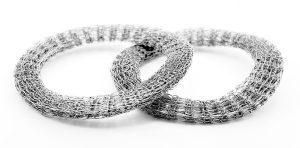
Knitted Wire Mesh EMI Gasket ring, mesh washers - TechMESH from Leader Tech Inc
Knitted Wire Mesh EMI Gasket ring
Beryllium Copper Fingerstock from Leader Tech Inc
Beryllium Copper EMI Fingerstock Gaskets

Leader Tech, through its innovative shielding solutions, stands as a modern steward of Hertz’s discoveries. From shielding applications that protect the integrity of radio and Wi-Fi signals to solutions that ensure the functionality of devices across industries, Hertz’s legacy endures in every electromagnetic shield that helps to guard today’s technologies. 

LinkedIn
X
Facebook
Email
Leader Tech EMI/RFI Shielding integrated into aerospace applications

Subscribe to receive our newsletters and product updates

This field is for validation purposes and should be left unchanged.
Leader Tech Inc needs the email address you provided to send you our newsletters and product updates. You may unsubscribe from these communications at any time.
Archives
×

Rep Firm