


The Future Is Wireless—And Electrically Noisy
Wireless power transfer (WPT) has evolved from niche convenience to a serious engineering platform. Whether it’s for electric vehicles, industrial robots, or implanted medical devices, the promise of delivering energy without cables has captured attention across industries. But that freedom comes with new risks—especially when it comes to electromagnetic interference (EMI) and radio frequency interference (RFI).
Every WPT system relies on a high-frequency electromagnetic field to transmit energy. This design inherently introduces electromagnetic noise and heat into the surrounding environment. Unlike conventional wired systems, WPT requires a completely new approach to EMI/RFI shielding, thermal control, and system integration.

Why EMI/RFI Shielding Matters in Wireless Power Transfer
Wireless power systems intentionally create strong magnetic or electric fields. These fields are efficient at transferring power, but also highly susceptible to interference issues:
- Leakage Fields: Stray emissions from transmitter coils or resonant circuits can interfere with adjacent electronics.
- Receiver Vulnerability: Components close to receiving coils, like microcontrollers or data radios, can be overwhelmed by their own power system’s field.
- Signal Crosstalk: Wireless power and wireless communication often share bandwidths, creating overlap and unintended interactions.
- Thermal Rise: As frequencies and power levels increase, so does heat generation—especially in compact, sealed enclosures.
Without proper EMI/RFI shielding, these challenges can lead to operational instability, regulatory failure, and degraded performance over time.

EV Wireless Charging: The Next Layer of Automotive Infrastructure
Wireless charging for electric vehicles has progressed from experimental tech to a cornerstone of future infrastructure. Whether it’s a static pad in a home garage or a dynamic system embedded beneath roadways, these platforms operate at high power levels—commonly 3.7 to 22 kW—and at resonant frequencies that pose EMI/RFI risks.
The challenge lies in proximity: vehicle sensors, processors, and communications modules are often located just inches from the charging hardware. If not properly shielded, these subsystems can experience interference that affects everything from battery management to vehicle-to-grid communication. Simultaneously, power electronics in these systems generate considerable heat, creating a dual need for electromagnetic and thermal control.

Industrial Automation: Robots That Charge Without Stopping
In manufacturing and logistics, autonomous robots increasingly rely on wireless charging to reduce downtime. Automated Guided Vehicles (AGVs) and Autonomous Mobile Robots (AMRs) may charge dozens of times per shift using floor-mounted coils or wall-dock systems.
Because these robots often operate in dense electronic environments—with RF sensors, motor drivers, AI processors, and cameras all packed into a compact chassis—EMI/RFI shielding becomes critical for stability and control. The systems must also handle frequent charge cycles without overheating, especially in plastic or sealed enclosures where passive cooling is limited.
Medical Implants: Delivering Power Below the Skin
Wireless charging is unlocking new capabilities in medical technology. Devices like neurostimulators and drug delivery pumps benefit from transcutaneous energy transfer, allowing recharging without invasive procedures. But their compact size, sensitive electronics, and proximity to human tissue create some of the most stringent EMI/RFI and thermal demands of any WPT system.
Any interference could affect not only the implant’s function but nearby diagnostic equipment or communication tools. Similarly, heat buildup must be carefully managed to avoid biological risks. As a result, shielding and thermal management solutions in this field must be small, stable, and biocompatible.

Leader Tech’s Role in Solving WPT Shielding Challenges
As wireless power becomes more prevalent in electric vehicles, industrial robotics, and medical implants, the demand for effective EMI/RFI shielding and thermal management continues to grow. Leader Tech offers a comprehensive range of materials designed to meet these diverse needs—from high-power automotive systems to compact, body-safe electronics.
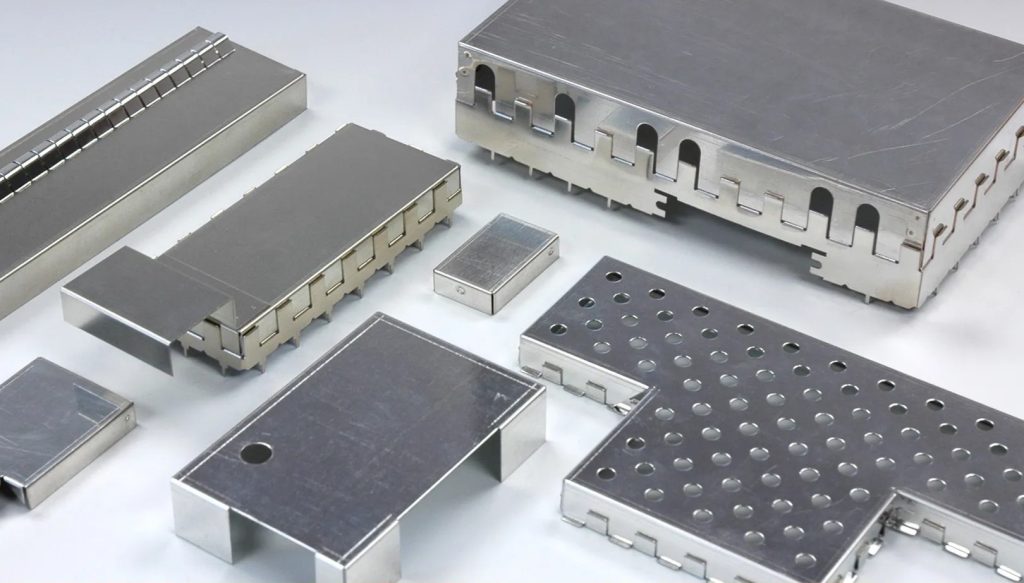
Board-Level Shields play a vital role in EV charging environments, where they help protect sensitive components—such as control circuits and communication modules—from high-frequency emissions generated during power transfer. These shields are also highly effective in robotics platforms, where dense electronics and fast-charging interfaces demand localized EMI/RFI control. When combined with Thermally Conductive Absorbers, these systems gain added protection against surface currents and unwanted heating near coil drivers and inverter modules.

Conductive Elastomers are ideally suited for industrial robotics, providing rugged sealing solutions that maintain EMI integrity even under vibration and mechanical stress. They are often used around docking interfaces and within shielded enclosures that experience frequent thermal cycling. In contrast, Graphite Thermal Gaskets are optimized for medical implants and miniaturized wearables, where thin, flexible materials are needed to manage heat in space-constrained environments. For applications requiring highly customized geometries—such as wireless neurostimulators—Leader Tech offers Precision-Formed Shielding solutions in ultra-compact formats that help maintain signal integrity without adding bulk.
Designing for Efficiency and Compatibility
Ultimately, WPT systems represent a convergence of high-frequency electronics, advanced materials, and precision mechanical integration. EMI/RFI shielding and thermal relief are not afterthoughts—they are foundational elements that determine system success.
Whether the system is embedded in pavement, worn on the body, or rolling through a warehouse, the invisible forces of heat and electromagnetic radiation are constantly at play. Addressing them requires more than patchwork fixes. It takes an integrated approach—and the right materials—to ensure stable, safe, and efficient wireless energy.

Looking Ahead: Emerging Trends in Wireless Power Systems
The next generation of WPT systems will bring even more complexity. In-motion EV charging lanes, AI-managed robotic fleets, and high-density medical implants will place tighter constraints on shielding performance, thermal relief, and spatial efficiency. Designers will be forced to manage multiple forms of interference at once—often in environments where failure is not an option.
As power levels rise and device footprints shrink, the margin for error disappears. Shielding materials will need to be thinner, lighter, and more adaptable. Systems will need modular protection that fits into tighter form factors without sacrificing compliance or performance.
At Leader Tech, we see these trends not as obstacles, but as design frontiers. Our continued investment in advanced materials and customized manufacturing ensures that engineers working at the cutting edge of wireless power always have access to protection that’s just as advanced as the systems they’re building.