

The global energy sector is entering an era defined not just by efficiency and innovation, but by resilience. As climate change drives more frequent and severe weather events, the demand on energy electronics has never been higher. Record-breaking heat waves, prolonged cold snaps, and increasingly destructive storms are no longer rare occurrences—they are now the baseline. These conditions place immense stress on the power electronics that keep homes, businesses, hospitals, and transportation systems running.
In this context, resilience becomes more than a technical specification; it is a societal necessity. When critical systems fail during weather extremes, the impact is immediate and often devastating—ranging from mass power outages to life-threatening interruptions in healthcare and communication. To meet these challenges, energy electronics such as inverters, converters, and storage systems must be engineered not only for efficiency and cost but for long-term durability in environments that are becoming more unpredictable every year.


The Growing Challenge of Weather-Driven Stress
Extreme weather impacts energy electronics in multiple ways, each demanding unique engineering solutions:
- Thermal Stress: During heat waves, components such as MOSFETs and IGBTs operate near or above their safe thermal thresholds. For example, during the Texas freeze and subsequent grid crisis in 2021, the stress of extreme temperature fluctuations contributed to widespread equipment failures, illustrating how fragile many systems are to heat or cold extremes.
- Moisture and Humidity Intrusion: Heavy rainfall, flooding, and humidity cycles drive corrosion and short circuits. In hurricane-prone regions, flooded substations and damp electronics have shown how moisture ingress can cripple entire systems in a matter of hours.
- Mechanical Stress: Strong winds and rapid temperature swings cause fatigue in solder joints, connectors, and housings. Offshore wind farms in northern climates, for example, often report cracking or weakening in critical soldered components over time due to vibration and cycling.
- Electromagnetic Vulnerability: Lightning strikes and geomagnetic storms induce surges that can propagate across power networks, exposing sensitive electronics to EMI/RFI disruptions. Even small disturbances can destabilize solar inverters or energy storage systems, leading to downtime or reduced efficiency.
The financial and operational costs are substantial. In the United States alone, weather-related power outages cost the economy billions of dollars annually, underscoring the urgent need for weather-driven resilience in power electronics.
Traditional Industry Approaches
Engineers have long relied on established methods to harden electronics against environmental challenges, but each approach carries limitations.
- Over-Designing Components: Using oversized capacitors, thicker copper traces, or stronger thermal pads adds durability. However, this strategy also increases cost, weight, and size, which can be impractical for compact renewable energy systems.
- Environmental Enclosures: Housing electronics in IP65, IP67, or NEMA-rated enclosures provides a protective barrier against dust, water, and temperature shifts. While effective, these enclosures can trap heat inside, creating new thermal management challenges.
- Active Cooling Systems: Fans and liquid-cooling solutions help maintain stable operating temperatures during heat surges. Yet, in dusty or humid climates, fans can clog, and liquid systems risk leakage or freezing in cold weather.
- Redundant Pathways: Incorporating parallel circuits or backup converters improves reliability but significantly increases both system complexity and cost.

While these methods are foundational, today’s climate realities expose their insufficiencies. A new generation of materials, shielding, and system-level strategies is required to create electronics that can thrive under unpredictable stress.
The Role of EMI/RFI Shielding in Weather-Resilient Electronics
Weather extremes often amplify electromagnetic interference. Thunderstorms introduce surges, fluctuating renewable inputs generate harmonics, and lightning strikes create transient spikes that ripple through energy systems. Sensitive electronics such as solar inverters, wind turbine converters, and battery storage systems are particularly vulnerable.
EMI/RFI shielding plays a critical role here. By containing emissions and blocking external disturbances, shielding ensures consistent performance even during weather-driven events. Standards such as IEC 61000-4-5 (surge immunity testing) highlight the importance of designing for resilience against transients.
Practical examples illustrate the stakes:
- Solar Inverters often experience coupled noise from nearby strikes that disrupt output.
- Battery Storage Systems require shielding to prevent interference from both internal switching operations and external weather-related surges.
Leader Tech provides a comprehensive portfolio of shielding products designed for these demanding environments:
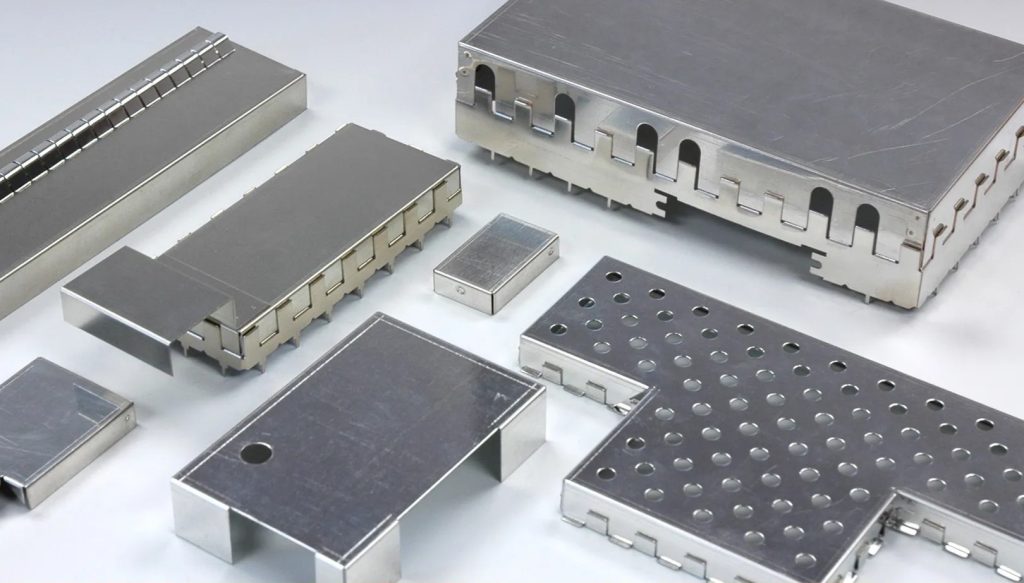
Board-Level Shields (CBS Series): These shields act as miniature Faraday cages, containing emissions directly at the circuit source. Available in one-piece, two-piece, multi-cavity, Slot-Lok™, and SMS designs, they provide strong shielding effectiveness while still allowing accessibility through removable covers. Their versatility makes them indispensable in high-density electronics, where even minor interference can cascade into system-wide instability during storm events.

Conductive Elastomers (TechSIL): Formulated from silicone or fluorosilicone filled with conductive particles such as silver, nickel, or aluminum, these elastomers achieve up to 110 dB of shielding effectiveness across wide frequency ranges. Beyond EMI suppression, they provide environmental sealing, maintaining performance under vibration, moisture, and temperature swings. Compliance with MIL-DTL-83528 ensures reliability in mission-critical applications exposed to harsh outdoor conditions.

Fabric-Over-Foam Gaskets (FSG Series): Constructed from nickel/copper-plated fabric over a resilient foam core, these gaskets provide 80–115 dB attenuation between 20 MHz and 10 GHz. They compress easily while maintaining conductivity over thousands of cycles, with operating ranges from –40 °F to 158 °F in standard form and up to 275 °F in high-temperature variants. This makes them an excellent choice for enclosures that experience both mechanical stress and climate-driven cycling.

Knitted Wire Gaskets (TechMESH): Offering attenuation up to 130 dB in the electric (E-) field and 80 dB in the magnetic (H-) field, knitted wire gaskets are engineered from corrosion-resistant alloys such as Monel and tin-plated copper-clad steel. Their spring-like construction ensures resilience under vibration and compression, a key requirement for outdoor enclosures exposed to storm-driven mechanical stress.

Tech Vent EMI/RFI Panels: These aluminum honeycomb vent panels combine airflow with EMI shielding, providing thermal relief without sacrificing protection. Corrosion-resistant platings and integrated gasketing allow them to withstand moisture, dust, and salt exposure, making them particularly well-suited for renewable energy enclosures deployed in coastal or humid regions.
These solutions maintain conductivity under compression, resist corrosion, and withstand repeated environmental stress. By integrating them into system designs, engineers create electronics that remain stable and reliable, even when weather extremes push other components to failure.
Thermal Management for Extreme Temperatures
Among all environmental stressors, extreme temperatures remain the most pressing threat. Electronics operate within narrow thermal margins, and exceeding those limits can lead to catastrophic failures such as thermal runaway, delamination, or rapid degradation of semiconductors.
Leader Tech offers a range of solutions that address these challenges with proven material performance:
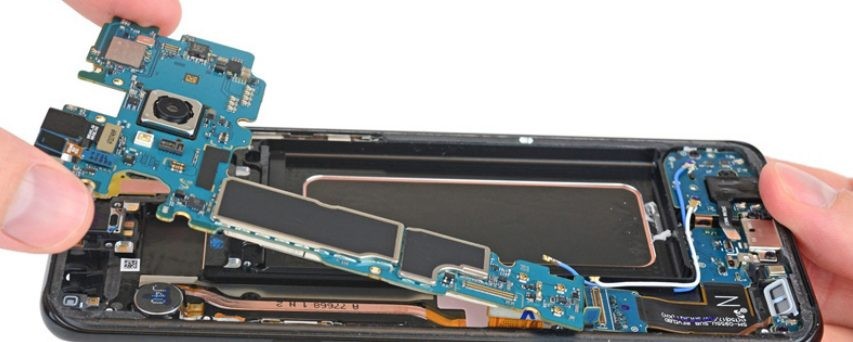
High-Performance Carbon Fiber Pads (TCF Series): Providing vertical conductivity of 16–35 W/m·K and lateral conductivity of around 10 W/m·K, these pads are highly compressible and stable across wide temperature ranges. They are ideal for applications requiring consistent heat transfer under variable loads and mechanical stress.

High-Performance Graphene Pads (TGN Series): With extraordinary thermal performance—up to 600 W/m·K in the X/Y plane and 70–130 W/m·K in the Z direction—these pads enable efficient heat spreading in extremely thin formats (down to 0.012″). They also maintain low thermal resistance (<0.05 °C-in²/W), making them an excellent choice for cutting-edge energy electronics that demand maximum thermal control in minimal space.

Thermally Conductive Absorbers (TCA Series): These materials combine thermal conductivity (1.0–6.0 W/m·K) with EMI/RFI absorption in a single product. Their compressibility, self-adhesion, and electrical insulation make them uniquely suited for applications where both interference suppression and heat management are required simultaneously.

Standard TIM Gap Pads: These thermal interface materials provide reliable heat transfer between components and heat sinks, helping to stabilize electronics exposed to wide temperature fluctuations. Available in multiple thicknesses and compressibilities, they conform to surface irregularities and reduce thermal resistance across contact points. Their consistent performance and ease of application make them a dependable choice for managing everyday heat challenges in energy systems operating under extreme weather conditions.
By offering solutions tailored to different thermal challenges, Leader Tech enables engineers to safeguard systems against overheating, improve operational stability, and extend the lifetime of critical components exposed to weather-driven extremes.
System-Level Design
Resilience cannot stop at the component level. System-level strategies provide a broader safety net, ensuring that even if individual parts face stress, the entire system continues to function.
- Adaptive Grid Interfaces: Modern inverters and converters can adjust dynamically to fluctuating renewable inputs during storms or cloud cover, maintaining stability in spite of environmental stress.
- Distributed Energy Storage: Breaking large systems into smaller, modular units reduces the risk that a single weather event will cripple an entire grid. This approach has been used successfully in microgrids across hurricane-prone regions like Puerto Rico, where smaller storage nodes maintain resilience even when larger grids fail.
- Predictive Maintenance: IoT-enabled sensors embedded in thermal and shielding pathways detect early signs of degradation. By addressing problems before failure, operators extend equipment lifetimes and reduce weather-driven downtime.
When combined with material science and shielding, these strategies create a multi-layered defense against weather impacts.


Leader Tech’s Contribution to Weather-Ready Energy Electronics
Leader Tech specializes in products that address both EMI/RFI and thermal challenges—two of the most critical factors in weather resilience. Our solutions are tailored for environments where electronics are exposed to constant stress:
- Solar Inverters in Desert Climates: Fabric-over-foam gaskets and conductive elastomers protect against dust infiltration and EMI/RFI disruptions.
- Offshore Wind Turbines: Board-level shields and corrosion-resistant elastomers withstand salt spray, humidity, and vibration while maintaining conductivity.
- Battery Storage Systems: Thermal absorbers and pads manage the rapid cycling of heat in compact enclosures, extending operational life.
By offering both standard and custom products, Leader Tech enables engineers to avoid long lead times and expensive tooling while still tailoring resilience strategies to specific applications. This flexibility is essential for energy systems that must balance cost-effectiveness with durability under extreme weather patterns.
Extreme weather is no longer an occasional anomaly—it is the new baseline. For energy electronics, this reality demands resilience at every level: from materials and shielding to thermal management and system-level architecture. Traditional approaches remain valuable, but they must now be combined with advanced shielding technologies, innovative thermal solutions, and adaptive design strategies to ensure survival in volatile conditions.
Leader Tech’s EMI/RFI shielding and thermal management products provide the building blocks for this resilience. By safeguarding energy electronics against interference, heat, and environmental stressors, we help engineers create systems that are not only efficient but capable of enduring the most unpredictable weather challenges.
In a world increasingly shaped by climate volatility, the future of reliable power depends on designing electronics that can weather the storm—literally and figuratively.