USA-Made

Driving the Revolution: Boosting Autonomous Vehicle Performance

Self Driving Taxi

Autonomous vehicles (AVs) are not just a technological milestone—they embody the future of mobility, offering unprecedented potential to transform industries and daily life. From redefining logistics to enhancing personal transportation, AVs bring a revolutionary approach to the way we move. However, the intricate systems that enable these vehicles to operate effectively—including sensors, processors, and communication modules—are highly dependent on robust electronic performance. Boosting the efficiency of these systems is critical for advancing the capabilities and reliability of autonomous vehicles. 

The Backbone of Autonomous Systems: Electronic Components 

Autonomous vehicles rely on a network of interconnected electronic systems to navigate, process data, and communicate. Key components include: 

LIDAR and RADAR systems for object detection and environmental mapping: 

  • LIDAR (Light Detection and Ranging) uses laser pulses to create detailed 3D maps of the vehicle’s surroundings, enabling precise object detection and obstacle avoidance. This technology allows AVs to “see” their environment with accuracy, even in complex urban settings. 
  • RADAR (Radio Detection and Ranging) operates effectively in diverse weather conditions, providing reliable distance measurements and tracking moving objects. RADAR’s ability to function in fog, rain, or darkness makes it a crucial technology for AV safety. 
LIDAR
An advanced LIDAR system demonstrates its capability to use laser pulses for high-precision 3D mapping and object detection, a critical technology enabling the reliable navigation of autonomous vehicles.

Cameras and sensors for real-time visual processing: 

  • High-resolution cameras capture visual data to identify traffic signs, lane markings, and pedestrians, mimicking human visual capabilities. Advanced image recognition software processes this data in milliseconds. 
  • Ultrasonic and infrared sensors enhance the vehicle’s ability to detect nearby objects and assess proximity. These sensors are essential for parking assistance and navigating tight spaces, ensuring precision where visual systems may have blind spots. 
Car parking sensor on rear bumper
Close-up of an ultrasonic parking sensor, a vital technology for modern autonomous and semi-autonomous vehicles, enabling precise object detection and assisting in safe navigation within tight spaces.

High-performance processors for decision-making and route planning: 

  • Advanced processors handle massive data streams from sensors and cameras, executing complex algorithms for real-time decision-making. They integrate artificial intelligence (AI) and machine learning to improve route optimization, hazard recognition, and adaptive driving responses. These processors are the “brain” of the AV, enabling seamless operation in dynamic environments.

Communication modules for vehicle-to-vehicle (V2V) and vehicle-to-infrastructure (V2I) interactions: 

  • V2V systems enable autonomous vehicles to share data about speed, position, and road conditions, reducing the risk of collisions by providing real-time situational awareness. 
  • V2I communication connects vehicles with infrastructure elements like traffic signals and road signs, facilitating smoother traffic flow and enhancing safety. These technologies are integral to creating smart cities where AVs operate efficiently alongside traditional vehicles. 

These components require seamless integration and peak performance to ensure safety, precision, and reliability. Yet, they are vulnerable to environmental and electromagnetic interference (EMI) challenges that can impair functionality, posing significant barriers to widespread adoption. 

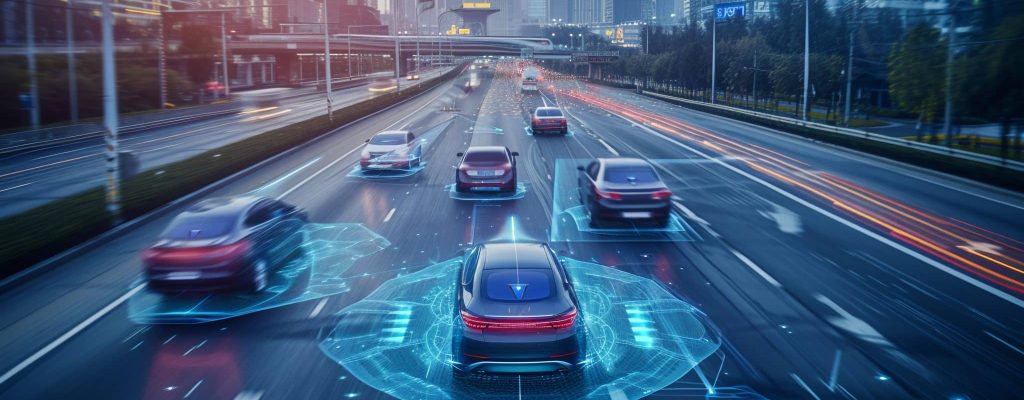
Autonomous Vehicles on Highway
Autonomous vehicles communicating on a highway demonstrate the power of vehicle-to-vehicle (V2V) technology, enabling real-time data sharing to improve safety, optimize traffic flow, and prevent collisions through seamless connectivity.

Challenges Facing Autonomous Vehicle Systems 

Electromagnetic Interference (EMI): 

  • The dense electronic environment of AVs increases the risk of EMI, which can disrupt signals between critical components. This interference can cause errors in navigation, communication, and decision-making, leading to potentially hazardous situations. 
  • As AVs incorporate more advanced technologies, such as 5G and edge computing, the risk of EMI will only grow. These high-speed communication systems must coexist without signal degradation, requiring meticulous design and effective shielding strategies. 
AV Dashboard

Thermal Management: 

  • High-performance processors and sensors generate substantial heat, which must be managed to prevent overheating and maintain system stability. Effective thermal management is essential for ensuring reliable operation and prolonging the lifespan of electronic components. 
  • Heat management is especially important in regions with extreme climates. For instance, AVs operating in desert environments face challenges of prolonged exposure to high temperatures, while those in colder regions must ensure that their systems function optimally despite freezing conditions. 
Waymo
Waymo's Jaguar I-Pace driverless car, an example of cutting-edge autonomous vehicle technology, integrates advanced sensors, LIDAR, and communication systems to navigate urban environments safely and efficiently.
Cars in Snow
Vehicles operating in extreme cold weather conditions rely on advanced thermal management systems to ensure critical components like processors and sensors function reliably, maintaining operational stability and safety.

Environmental Resistance: 

  • AVs operate in diverse environments, exposing components to moisture, dust, and temperature fluctuations. These environmental factors can degrade sensitive electronics, reducing their performance and reliability over time. 
  • The resilience of AVs is also critical for off-road applications, where exposure to mud, debris, and water is common. Ensuring the durability of these systems allows AVs to expand their use cases beyond urban settings. 
Car driving through the puddle and splashing by water.
Car Offroad

Signal Integrity: 

  • Reliable data transmission is essential for the vehicle’s operation, particularly in V2V and V2I communications. Signal degradation or interference can compromise the accuracy and timeliness of critical information. 
  • Maintaining signal integrity becomes even more challenging in densely populated urban areas, where multiple AVs and connected devices compete for bandwidth. Innovative solutions are needed to ensure uninterrupted communication. 

Advanced Solutions for Enhanced Efficiency 

To address these challenges, manufacturers are increasingly turning to advanced EMI shielding and thermal management solutions. Leader Tech’s products play a vital role in ensuring the optimal performance of autonomous vehicle systems. 

EMI Shielding: 

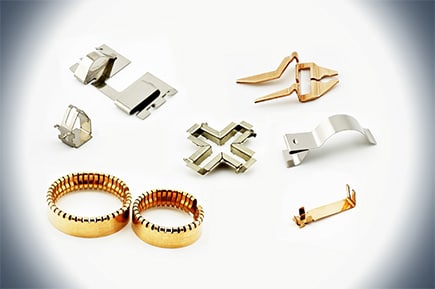
  • Leader Tech’s Board Level Shields and Conductive Elastomers provide robust protection against EMI, ensuring signal integrity and reliable system operations. By isolating sensitive components from interference, these shielding solutions maintain the accuracy and consistency of AV systems. 
custom-metal-fabrication-button
Custom Metal Fabrication
Circuit-Board-Shielding
Board Level Shielding
Conductive Elastomer 04
Conductive Elastomers
  • Custom shielding solutions are tailored to specific configurations, making them ideal for sensitive components like LIDAR and RADAR systems, cameras, and communication modules. These shields prevent interference that can compromise signal quality and operational precision. 
  • Additionally, Leader Tech’s shielding materials are designed to meet industry standards, ensuring compatibility with emerging technologies such as 5G communication modules and AI-driven processors. 

Thermal Management: 

  • Graphite thermal gaskets, exhibiting high thermal conductivity up to 400 W/m·K horizontally and 5.0 W/m·K vertically, are effective for dissipating heat from high-performance processors and sensors. This ensures consistent performance and prevents overheating during operation. 
  • In addition to graphite solutions, Leader Tech offers thermal absorbers that provide dual benefits of thermal and EMI protection. These absorbers are particularly effective in managing heat and reducing electromagnetic interference in multi-layered electronic assemblies within AVs. 
Graphite pic
Thermally Conductive Graphite
Thermally Conductive Absorbers from Leader Tech Inc
Thermally Conductive Absorbers

Environmental Sealing: 

  • Conductive elastomers and gaskets offer dual benefits of EMI shielding and environmental resistance. These solutions protect cameras, sensors, and processors from moisture, dust, and other external factors, ensuring durability and consistent performance even in harsh conditions. 
  • Environmental sealing is particularly critical for AVs that operate in extreme climates, where fluctuating temperatures and adverse weather conditions can compromise the integrity of unprotected components. By providing a robust seal, Leader Tech’s products enhance the reliability of electronic systems in challenging environments. 

Preparing for the Future of Autonomous Vehicles 

The revolution of autonomous vehicles is accelerating, driven by innovations in connectivity and AI. These advancements demand efficient, reliable electronic systems capable of tackling complex challenges. Leader Tech’s cutting-edge EMI and thermal solutions empower manufacturers to meet these demands, paving the way for breakthroughs in AV performance. 

Looking ahead, the integration of 5G connectivity, enhanced AI capabilities, and improved battery technologies will further elevate the potential of autonomous vehicles. These innovations will require continued advancements in shielding and thermal management to ensure that AV systems remain reliable and efficient under increased computational loads. 

Autonomous electric bus

Autonomous vehicles are more than a technological marvel—they represent a paradigm shift in transportation. By addressing the challenges of EMI, thermal management, and environmental resistance, we can help ensure their success in reshaping mobility and transforming industries worldwide. The collaboration between technology providers and manufacturers will be key to unlocking the full potential of this transformative technology. 

To learn more about how Leader Tech’s solutions can optimize autonomous vehicle systems, contact us today. Our team is ready to provide tailored insights and support for your specific needs. 

LinkedIn
X
Facebook
Email
David Mendez Galpern
Leader Tech EMI/RFI Shielding integrated into aerospace applications

Subscribe to receive our newsletters and product updates

This field is for validation purposes and should be left unchanged.
Leader Tech Inc needs the email address you provided to send you our newsletters and product updates. You may unsubscribe from these communications at any time.
Archives
×

Rep Firm