
Revolutionizing Thermal Management:
Graphene, Indium, and Carbon Fiber Thermal Products
Introduction
In the ever-evolving world of technology and electronics, managing heat has become a critical challenge. The relentless pursuit of smaller, more powerful devices has led to increased heat generation, making efficient thermal management a paramount concern. Fortunately, recent advancements in materials science have paved the way for innovative solutions.
Graphene, indium, and carbon fiber thermal products are at the forefront of this revolution, offering remarkable thermal conductivity and exceptional versatility. In this article, we will explore these cutting-edge materials and their applications in the field of thermal management.
Graphene: The Wonder Material
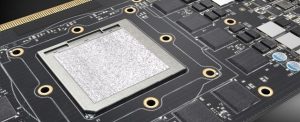
Graphene, often dubbed as the “wonder material” of the 21st century, is a single layer of carbon atoms arranged in a two-dimensional honeycomb lattice. Its remarkable properties have made it a game-changer in various industries, including thermal management.
Unmatched Thermal Conductivity: One of graphene’s most celebrated features is its exceptional thermal conductivity. It can efficiently transfer heat at rates surpassing those of traditional materials like copper and aluminum. This property makes graphene an ideal candidate for use in heat sinks and thermal interface materials (TIMs), capable of a thermal conductivity in the X axis of 600 W/m-K and 70-130 W/m-K across the Z axis. Graphene exhibits remarkable thermal stability, even at extremely high temperatures. This stability makes it suitable for use in demanding environments where conventional materials may degrade or fail.

With a density ranging from 0.6 to 1.0 grams per cubic centimeter (g/cm³), which is remarkably low compared to standard thermal interface material (2.0 to 3.0 grams per cubic centimeter (g/cm³), its minimal thickness allows for the creation of ultra-thin and lightweight thermal management solutions that are crucial in modern electronics.
Indium: A Soft and Ductile Metal
 Indium, has been gaining attention for its contributions to thermal management in recent years.
Low Melting Point: Indium boasts a low melting point, around 156.6°C (313.9°F). This characteristic is particularly valuable in applications that require the creation of reliable, low-temperature thermal interfaces. When indium is used in these applications, it becomes an efficient thermal conductor, effectively filling microscopic gaps and providing an unbroken path for heat transfer.
Excellent Thermal Interface Material: Due to its softness, indium can conform to irregular surfaces, providing an excellent thermal interface between components. It is often used in applications where a reliable, high-conductivity thermal interface material is needed. In fact, its thermal conductivity is effectively the same throughout all 3 axis (80 W/m-K).
 High Thermal Conductivity: While not as conductive as graphene, indium still exhibits respectable thermal conductivity, making it suitable for various thermal management applications.
Carbon Fiber: Enhancing Thermal Materials
 Carbon fiber is a high-strength, lightweight material composed of carbon atoms bonded together in a crystalline structure. While it is best known for its exceptional strength-to-weight ratio, carbon fiber also possesses interesting thermal properties.
High Thermal Conductivity: Although not as thermally conductive as graphene or metals like copper, carbon fiber still exhibits a high thermal conductivity compared to the standard acrylic gap fillers. This, combined with its low weight, makes it an attractive choice for thermal management in various industries. Various thermal conductivity options can be provided for the Z axis whilst keeping it constant throughout the X and Y axis.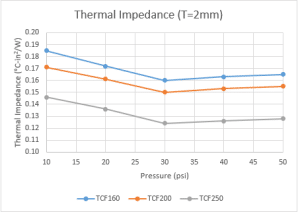
Lightweight and High Strength: Carbon fiber materials are known for their lightweight nature and exceptional mechanical properties. When added to thermal products, they contribute to the overall strength and durability of the material without adding excessive weight. Available densities range from 1.85 to 3.4 g/cm³.
Applications
Now that we’ve explored the unique properties of graphene, indium, and carbon fillers, let’s delve into some of the exciting applications where these materials are making a difference in thermal management.
Electronics Cooling: As electronic devices become increasingly compact and powerful, effective cooling solutions are vital. Graphene-based heat sinks and TIMs are emerging as essential components in laptops, smartphones, and high-performance computing systems. Their exceptional thermal conductivity helps dissipate heat efficiently, preventing overheating and maintaining device performance.
LED Lighting: The lighting industry has also embraced these advanced materials. Indium-based thermal interface materials play a pivotal role in ensuring the longevity and efficiency of LED lights. By efficiently transferring heat away from the LED chips, indium-based solutions contribute to increased lifespan and reduced maintenance.
Aerospace and Automotive: In the aerospace and automotive sectors, weight reduction and thermal management are paramount. Carbon fiber-enhanced composites are utilized to create lightweight yet robust components that can withstand high temperatures and mechanical stress. These materials help improve fuel efficiency and overall performance in these industries.
Renewable Energy: Graphene and carbon fiber materials are also being integrated into thermal management systems in renewable energy applications, such as solar panels and wind turbines. These materials can improve the efficiency of energy conversion and extend the lifespan of critical components, reducing maintenance costs.
Graphene, indium, and carbon fiber are three remarkable materials that have revolutionized the field of thermal management. Each of these materials possesses unique properties that make them ideal for specific applications. Graphene’s exceptional thermal conductivity and flexibility make it a top choice for thermal management. Indium’s low melting point and excellent thermal interface properties make it indispensable in soldering applications and thermoelectric modules. Carbon fiber, with its lightweight yet thermally efficient nature, finds extensive use in various industries.
As technology continues to advance, these materials are likely to play an increasingly significant role in developing innovative thermal management solutions. The combination of these materials with ongoing research and development efforts promises a future where thermal products are not only more efficient but also more sustainable and adaptable to a wide range of applications.