USA-Made

Gustav Robert Kirchhoff: The Circuit Theorist Behind EMI Mastery

Kirchhoff

When engineers strive to protect modern electronics from signal degradation, crosstalk, or power surges, they often draw on tools that trace back to one man: Gustav Robert Kirchhoff. While Kirchhoff is most famously associated with his circuit laws, his contributions reach much deeper into the heart of electromagnetic interference (EMI) science. His pioneering work on electrical circuits laid the foundational rules for understanding how currents and voltages behave—knowledge that is crucial to identifying, analyzing, and controlling EMI in everything from smartphones to spacecraft.

Kirchhoff’s legacy is not just theoretical; it’s deeply practical. Every PCB layout, power integrity analysis, and shielding implementation benefits from the logic embedded in his laws. In EMI design, where the line between function and failure is often determined by nanoseconds and millivolts, Kirchhoff provides the reliable framework engineers depend on. He showed us how to quantify electrical behavior in a complex network, a feat that made modern electronics not only possible but resilient.

PCB

Mapping Electrical Motion: Kirchhoff’s Laws

At the core of EMI diagnosis and mitigation are Kirchhoff’s two seminal laws:

  • Kirchhoff’s Current Law (KCL): The total current entering a junction equals the total current leaving it.

  • Kirchhoff’s Voltage Law (KVL): The total voltage around any closed loop in a circuit is zero.

These deceptively simple principles form the backbone of virtually every circuit analysis. When engineers model the behavior of signal paths, power rails, or differential pairs, they rely on KCL and KVL to define boundary conditions. EMI often arises when there’s an imbalance—a stray current that returns through an unintended path or a voltage drop that introduces noise. Kirchhoff’s rules allow designers to spot these imbalances before they become real-world interference.

In complex systems, like those found in aerospace, automotive, and medical instrumentation, Kirchhoff’s laws enable simulations that ensure energy flows as intended and avoids parasitic paths. They help confirm that redundant grounding does not create interference loops, and that high-speed differential signals maintain their integrity without radiating noise. Engineers use these laws to determine power distribution balance, decoupling strategies, and current-sharing in parallel paths, all of which directly influence EMI risk.

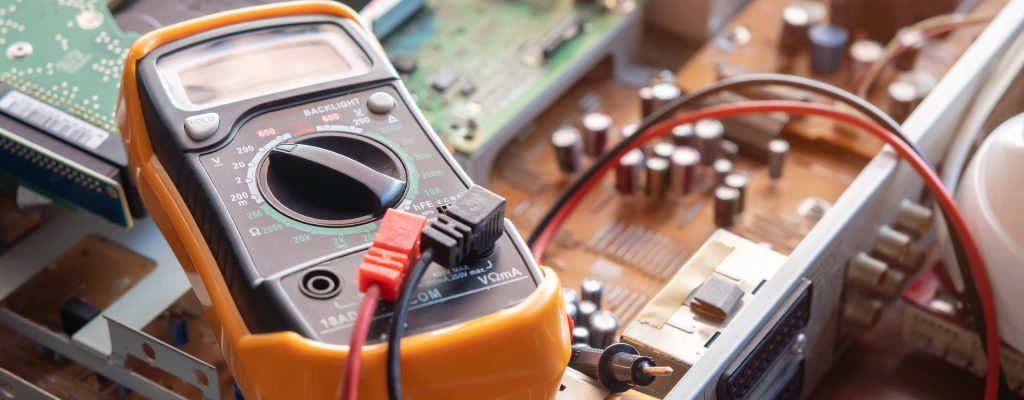
Multimeter
Applying Kirchhoff’s Laws: Multimeter probing verifies circuit continuity and voltage drops.

The Anatomy of an Interference Path

Understanding EMI requires mapping how noise enters, travels through, and escapes a circuit. Kirchhoff’s laws allow engineers to:

  • Trace unintended coupling paths between components.

  • Model return current paths, where disrupted loops can act as antennas.

  • Balance impedances to reduce signal reflections and harmonics that radiate EMI.

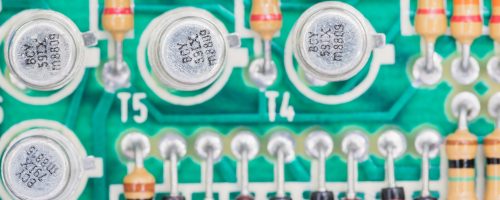
Condensers and Resistors
Passive components like resistors and capacitors can become unintended gateways for interference when placed near sensitive signal paths.
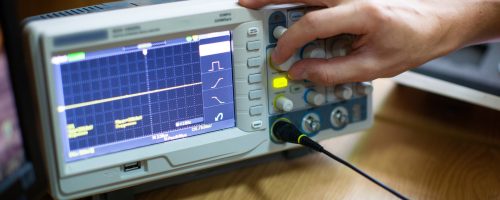
Oscilloscope
Oscilloscopes reveal the hidden effects of EMI, helping engineers trace coupling paths and diagnose interference between circuit domains.

When noise invades a system, it rarely travels in a straight line. Instead, it finds the path of least impedance—a path that Kirchhoff’s laws help identify. Designers use KCL to calculate how a sudden surge in current might reroute through sensitive components, potentially damaging ICs or corrupting data. KVL reveals whether induced voltages across passive elements like inductors or capacitors might unintentionally amplify that interference.

Engineers must also analyze how these paths behave under various loads and switching conditions. For example, shared return paths in ground planes may couple noise from one high-speed circuit to another low-noise analog path. These interactions often go unnoticed until EMI testing reveals a failure. Kirchhoff’s laws make it possible to build predictive models that simulate these complex couplings, helping engineers proactively redesign systems before production begins.

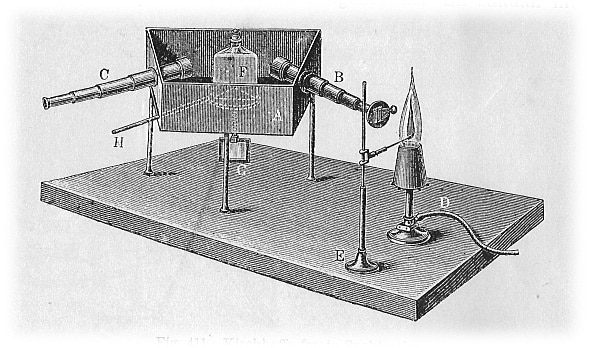
Kirchhoffs_first_spectroscope
Kirchhoff’s spectroscope, originally designed to analyze how light spreads and interferes across spectra, mirrors the modern challenge of tracing electromagnetic interference through complex circuits — both require understanding how invisible energy travels, overlaps, and affects sensitive systems.

Frequency, Feedback, and Field Effects

As modern electronics operate at higher frequencies, Kirchhoff’s laws remain applicable but must be supplemented with electromagnetic field theory. Still, they serve as the foundation:

  • In feedback networks, voltage loops must be tightly controlled to prevent oscillations or unexpected emissions.

  • In switched-mode power supplies, KCL helps maintain current integrity across rapidly changing load conditions.

  • In mixed-signal designs, KVL is crucial to ensure analog and digital domains don’t interfere destructively.

Modern smart car radar
Modern automotive radar systems operate at high frequencies, where even minor feedback or poorly controlled return paths can introduce interference that disrupts object detection and safety functions
5G Antenna
5G infrastructure pushes devices into gigahertz territory, where tightly managed signal loops and field effects become critical to preventing EMI and ensuring clean, high-speed data transmission.

High-speed circuits often behave less like discrete components and more like transmission lines. Even so, Kirchhoff’s principles remain invaluable when defining boundary conditions, modeling parasitics, or isolating noise paths. At gigahertz frequencies, small parasitic capacitances and inductances can act as significant interference sources, and Kirchhoff-based models help engineers account for them accurately.

In automotive radar, 5G communication modules, and advanced robotics, feedback and control loops demand precise voltage and current relationships. Engineers must ensure loop stability and minimize unintended emissions using KVL and KCL. When systems operate across a wide dynamic range or in high EMI environments, Kirchhoff’s clarity becomes a stabilizing force in the design process.

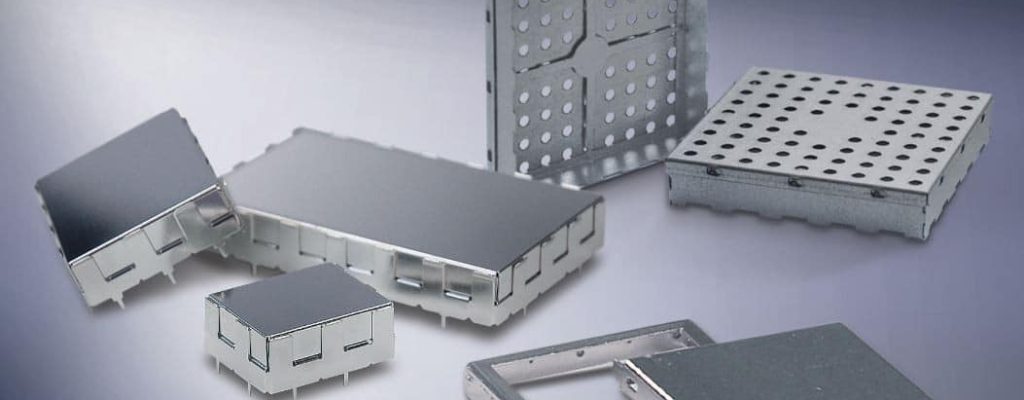
Circuit_Board_Shields_02
Board Level Shielding plays a vital role in containing high-frequency emissions and protecting sensitive components from feedback and stray fields—ensuring stable operation in today’s densely packed, high-speed electronics.

Simulation and Shielding: Tools Built on Kirchhoff

Nearly every electrical simulation software—from SPICE to HFSS—relies on Kirchhoff’s laws to establish baseline equations. These simulations help predict:

  • Where EMI might originate within a circuit

  • How transient voltages may evolve, especially during switching events

  • How effective shielding or filtering components will be

In digital systems, signal integrity simulations often begin with netlist extraction based on Kirchhoff’s principles. These simulations assess how each node and branch behaves under real-world conditions: rapid switching, load changes, and environmental disturbances. They also help evaluate the performance of shielding components, such as metal enclosures, thermal pads, and ferrite suppressors, which are key tools in Leader Tech’s product line.

Simulation tools use Kirchhoff’s laws to generate matrix-based circuit models that handle both time-domain and frequency-domain analysis. Designers can then overlay these models with field solvers to predict crosstalk, ground bounce, and conducted emissions. This synthesis allows for pinpointing EMI sources and placing shields or filters precisely where they are most effective, avoiding over-design and reducing weight and cost—critical for aerospace, defense, and mobile applications.

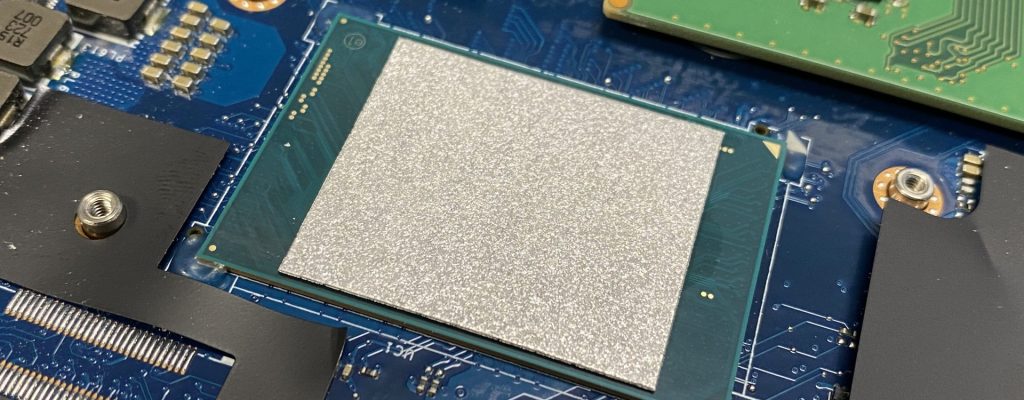
Thermal Indium
Indium-based thermal interface materials not only manage heat dissipation in compact systems—they also help maintain signal integrity by reducing thermally induced EMI fluctuations in critical components.

Carrying the Torch at Leader Tech

Leader Tech’s approach to EMI shielding and thermal management is grounded in the circuit fundamentals that Kirchhoff defined. Our products—from conductive elastomers and board-level shields to ferrite cable suppressors—are strategically designed to prevent EMI from forming the loops and junctions that Kirchhoff’s laws illuminate.

For example, ferrite cable shields work by interrupting high-frequency noise currents, a process that can only be fully understood by analyzing how those currents distribute at junctions and loops, exactly as KCL predicts. Likewise, conductive gaskets and board-level enclosures are designed to minimize loop areas that could otherwise become radiators, a scenario avoided by adherence to KVL.

At Leader Tech, we manufacture advanced shielding and thermal management products that help engineers mitigate EMI risks identified during their design process. Whether it’s through the use of thermally conductive pads to address dual-mode heat and EMI concerns, or cable shielding solutions to suppress high-frequency noise at key entry points, our product offerings support the application of Kirchhoff’s principles in real-world circuit protection.

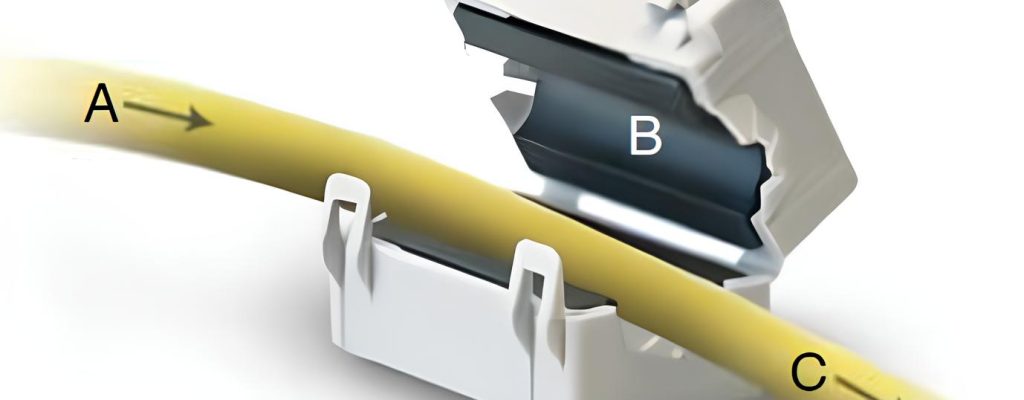
Cabling Upscaled
Ferrite cable shields, like those found on USB and HDMI cables in computers, suppress high-frequency noise by absorbing unwanted currents—supporting clean signal paths and reducing EMI at the source.

Kirchhoff: A Lawgiver for the EMI Age

Though Gustav Kirchhoff lived in the 19th century, his insights into the conservation of current and voltage remain embedded in the digital, high-speed, interconnected devices of today. His laws are not just theoretical cornerstones—they are practical tools used by every engineer facing EMI challenges.

Every time an engineer isolates a signal glitch, mitigates a transient spike, or prevents signal coupling through clever grounding or shielding, Kirchhoff’s influence is present. His principles have endured precisely because they are universal: energy must go somewhere, and its behavior can be predicted.

From diagnosing erratic system behavior to designing robust shielding solutions, Kirchhoff’s legacy is alive in every EMI-resistant product. In many ways, he didn’t just help us understand circuits; he gave us the language to control them. And in the world of electromagnetic interference, control is everything.

LinkedIn
X
Facebook
Email
David Mendez Galpern
Leader Tech EMI/RFI Shielding integrated into aerospace applications

Subscribe to receive our newsletters and product updates

This field is for validation purposes and should be left unchanged.
Leader Tech Inc needs the email address you provided to send you our newsletters and product updates. You may unsubscribe from these communications at any time.
Archives
×

Rep Firm