In the grand tapestry of scientific discovery, few names stand as prominently as André-Marie Ampère, a self-taught mathematician and physicist whose groundbreaking work in electromagnetism laid the foundation for modern electrical engineering. His insights into the relationship between electricity and magnetism not only influenced his contemporaries but also became the undercurrent of countless breakthroughs in wireless communication, alternating current, and modern electronics. The principles he uncovered would later be instrumental in the advancements made by visionaries like Michael Faraday, Heinrich Hertz, Nikola Tesla, and Reginald Fessenden, whose work in electromagnetic induction, alternating current, radio waves, and signal transmission reshaped the world.
Early Life and Scientific Journey
Born in 1775 in Lyon, France, Ampère displayed an early fascination with mathematics and natural sciences. Despite facing personal tragedies, including the loss of his father during the French Revolution, he remained dedicated to self-education. His voracious reading and natural aptitude for problem-solving led him to teaching and research roles, where he quickly gained recognition for his contributions to the scientific community. His entry into electromagnetism was sparked by Hans Christian Ørsted’s experiment demonstrating the deflection of a compass needle by an electric current, a phenomenon that Ampère sought to explain mathematically.
The Birth of Electrodynamics
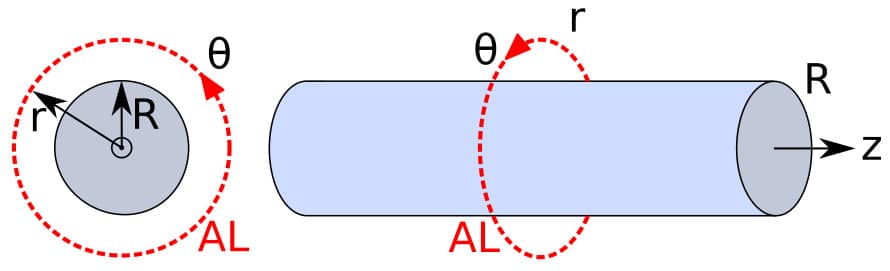
Ampère’s most notable contribution to science was his formulation of the laws governing electromagnetism, known today as Ampère’s Circuital Law. His research demonstrated that electric currents produce magnetic fields, a revelation that became a cornerstone of Maxwell’s equations. In 1820, inspired by Ørsted’s discovery, Ampère set out to mathematically describe this interaction. His work culminated in the development of the field of electrodynamics, providing a quantitative understanding of electromagnetism that remains fundamental to this day.
The ability to manipulate electromagnetic forces, as Ampère first described, was later expanded by Hertz, who demonstrated the existence of electromagnetic waves, and Fessenden, who applied these concepts to develop the first practical radio transmission. These discoveries were all deeply rooted in Ampère’s original theories, proving that the intricate dance between electricity and magnetism could be harnessed for revolutionary communication technologies. Furthermore, Faraday’s later work on electromagnetic induction built upon Ampère’s findings, leading to the development of transformers and electric motors—key components of modern electrical infrastructure.
Rivalries and Collaborations
Ampère’s work did not emerge in isolation; it was part of a broader scientific debate regarding the nature of electricity and magnetism. His discussions and, at times, rivalries with scientists like Ørsted and Faraday helped refine his theories. While some scientists were initially skeptical of his findings, Ampère’s mathematical approach provided the necessary rigor to establish his principles as scientific fact. His collaboration with contemporaries laid the groundwork for the next generation of scientists to further develop the field of electromagnetism.
Laying the Groundwork for Future Innovations
While Ampère may not have directly built the electrical devices we use today, his theories formed the basis for many technological advancements. His discovery that two parallel conductors carrying current exert a force on each other—a principle known as the Ampère force—helped shape our understanding of how electrical currents behave in circuits.
This knowledge proved invaluable in later advancements in electromagnetism, particularly in refining how electrical currents could be harnessed for practical applications. The principles he established were instrumental in the refinement of alternating current systems, the evolution of radio waves, and the transmission of electromagnetic signals that enabled the development of modern communication networks. Tesla’s innovations in alternating current motors and wireless power transmission can be traced back to the foundational work Ampère set in motion.
Further validation of Ampère’s work came with the discovery of electromagnetic waves, solidifying the theoretical foundations he laid. As these waves became the basis for wireless transmission, innovations in radio communication took shape, with Reginald Fessenden pioneering the first voice transmissions and long-distance connectivity. This legacy continued into the 20th century, where increasingly sophisticated electrical and radio systems enabled unprecedented advancements in technology. The ability to generate and control electrical currents, as Ampère first described, became central to everything from industrial power grids to modern high-frequency applications.
The Broader Impact of Electrodynamics
Ampère’s discoveries were not limited to theory; they have had far-reaching implications across multiple industries. His work provided the scientific basis for electric motors, which later became integral in everything from household appliances to large-scale industrial machinery. Without his insights, advancements in fields such as aerospace, automotive, and medical electronics would not have been possible. The ability to manipulate electromagnetic fields allowed for the miniaturization of components, enabling modern computing, high-frequency signal processing, and advanced telecommunications.
The impact of these principles can be seen in modern electronics, where electromagnetism plays a crucial role in circuit design and communication systems. Today’s microelectronics, which govern everything from communication devices to high-speed computing, are deeply reliant on the theories that emerged from his early work. Additionally, the electromagnetic shielding technologies used in everything from space exploration to 5G communication networks rely on Ampère’s foundational work.
A Legacy That Powers the World
Beyond theory, Ampère’s name endures in the very fabric of electrical engineering. The unit of electric current, the ampere, is named in his honor—a testament to his enduring influence on science and technology. His work provided the mathematical and conceptual groundwork that allows us to harness electricity for everything from power grids to communication networks.
As we continue to innovate in fields like wireless communication, quantum computing, and AI-driven electronics, the foundational principles established by Ampère remain as crucial as ever. His discoveries have not only shaped past breakthroughs but will continue to influence future generations of scientists and engineers.
In the lineage of great thinkers—from early pioneers in electromagnetism to the architects of wireless communication and advanced electrical systems—we see a continuous evolution of ideas, each building upon the last. Without Ampère’s pioneering efforts in electrodynamics, the modern world of electronics and wireless technology might look vastly different. His legacy is one of discovery, insight, and an enduring impact that powers the innovations of today and tomorrow. At Leader Tech, we continue to build on these foundational principles, developing cutting-edge EMI shielding and thermal solutions that protect and enhance modern electronic systems.